Care & helpFamilyLoveConflict & exploitationShared struggle
Jean Valjean leaves prison needing work and a bed for the night. He has money to pay, but his papers identify him as a former prisoner. Again and again, people refuse him food and lodging. Before he can build a new life, he needs someone willing to open a door.
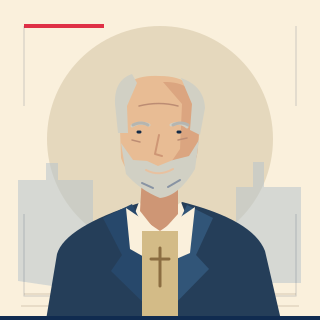
Valjean tells the bishop that he is a released convict who has been refused lodging. The bishop welcomes him to the table, making hospitality an encounter between a criminal record and human dignity.
Javert represents the authority that follows Valjean beyond the prison gate. Their conflict asks how far a past conviction should determine a person’s place in society.
Three people and one group, with a short introduction and a path to their chapters.
CharacterGrantaire
A sceptic among revolutionaries, Grantaire doubts the group’s ideals but admires Enjolras. Hugo introduces him through the distance between what he believes and the person he follows.
Over ninety, Gillenormand has a forceful temper and the manners of an earlier age. His introduction lets that old world speak before the story explores his household.
A former businessman left with a cart and a horse after bankruptcy, Fauchelevent now earns his living as a carter. We meet him trapped beneath his cart after an accident.
A small republican circle whose usual meeting place is the back room of the Café Musain. In French, ABC sounds like l’abaissé, “the downtrodden”: the people they hope to uplift.
Nine principal names: Enjolras · Combeferre · Jean Prouvaire · Feuilly · Courfeyrac · Bahorel · Lesgle / Laigle (Bossuet) · Joly · Grantaire
Who they are, what they need and the connections that help you enter the story. Explore their connections in the map above, or meet each person individually here.
Jean Valjean leaves prison needing work and a bed for the night. He has money to pay, but his papers identify him as a former prisoner. Again and again, people refuse him food and lodging. Before he can build a new life, he needs someone willing to open a door.
Javert is a police inspector who trusts the law to keep the world in order. When he meets a former prisoner, the criminal record determines how he treats him. He demands obedience from people under his authority and applies strict rules to himself too. That sense of duty helps explain his stubbornness.
Fantine works away from her daughter, Cosette. She needs to pay her own living costs and send money to the people caring for her child. Her job is insecure, and losing that income could threaten both her own livelihood and Cosette’s care.
At the Thénardiers’ inn, their daughters play while Cosette works. Her mother, Fantine, sends money for her care, but the child depends on adults who frighten her. They decide what she eats, what she wears and how she spends her day. This is her life before she has much chance to choose for herself.
Marius is a young Parisian student connected to the republican circle around Enjolras and Courfeyrac. In the novel, those friendships place him among people whose political convictions differ from the loyalties he learned at home.
Éponine is the Thénardiers’ daughter, first seen as a favoured child at their inn and later as a young woman living in poverty in Paris. She knows the streets well and can read and write, skills she uses in the errands her father sends her on.
Enjolras leads a circle of republican students opposed to the monarchy. He expects serious political commitment from his friends and has little patience for distractions. Combeferre and Courfeyrac share the cause but bring different temperaments to the group.
Gavroche has to find food and shelter on the streets of Paris, with very little protection. He gets by on resourcefulness and sharp wit, often making the adults around him seem less knowledgeable than he is. His jokes are easy to enjoy; keep in mind how much work it takes this child to get through another day.
The Thénardiers run an inn in Montfermeil and raise their young daughters there. A guest needing a room or a child entrusted to their care sets them calculating the profit. On stage, they offer customers a showy welcome; the joke emerges as we notice the ways they cheat them.
At Bishop Myriel’s home in Digne, the door stays open to visitors. He lives simply with his sister and their housekeeper, giving much of his income to people in need. Hugo introduces this household before Valjean enters the story: we learn how hospitality works here before we meet the guest.